Truly a Great Highway
Date: 2026-08-01
Submitted: 2026-08-31 15:09:07
Visibility: World-readable
Treasures of the Pharaohs at the de Young, plus a bike ride through Golden Gate Park and along the length of Sunset Dunes
On the first day of August I had the day to myself. I discovered a conjunction at the de Young Museum in Golden Gate Park: the opening day of the traveling Treasures of the Pharaohs exhibition, and the closing weekend of an exhibit of photography from San Francisco's history. The exhibition was requiring timed tickets, but by Friday night the tickets were still available so I picked one up, and plotted a route through San Francisco which would let me bike through Golden Gate Park after the museum.
I drove with my bike to Daly City, then wheeled my bike onto BART to ride into the city. I got off at Glen Park and as I was crossing Bosworth the #44 bus was already stopped at the bus stop across the street. The light stayed in my favor long enough for me to cross, mount my bike on the rack on the front, and board the bus for the steep winding climb up O'Shaughnessy Boulevard and down the other side to Golden Gate Park.
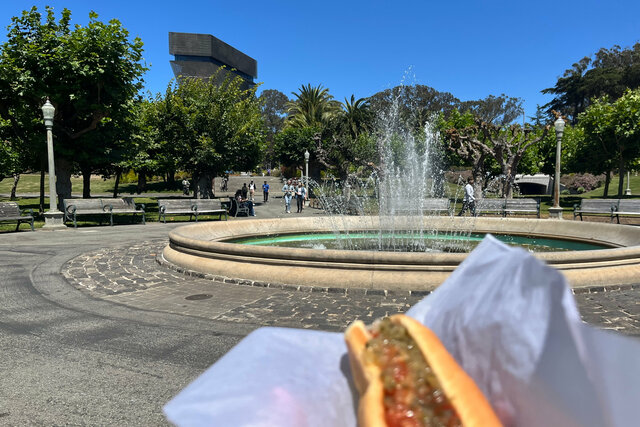
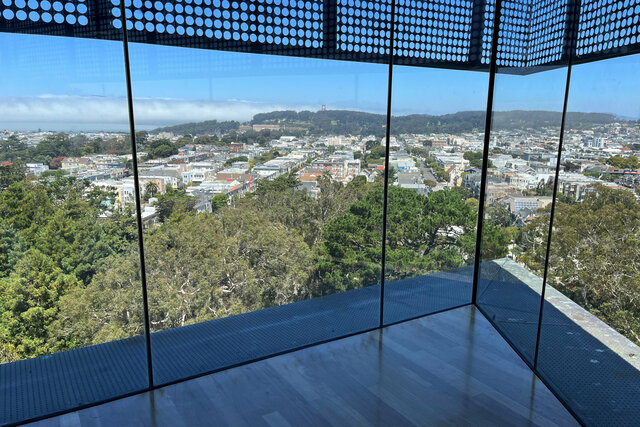
I got a veggie dog from a street-food tent on the Music Concourse (hot dogs are of course American street food) and ate it on a bench in front of a fountain in the middle of the concourse, then parked my bike in front of the de Young Museum. I went first to the Hamon Observation Tower and caught the elevator to the top to look over the Music Concourse, Golden Gate Park, the Richmond; and look into the high-rise towers in the Financial District and Soma in the middle distance. San Francisco has a shortage of good public observation decks (views from the hills are great but not a perfect substitute); this museum's observation tower is a one of the exceptions.
I understand the merits of timed entry as a crowd-control mechanism, but it's awkward to have to precisely plan my time in advance when I don't know how long it's going to take to drive up the Peninsula or catch a Muni bus through the city (either of which could take 50% longer than normal if the transportation gods are having a bad day). I'm happy that most museums and attractions have dispensed with timed entry tickets for most exhibits, but they still retain them for some special exhibitions. (And it's almost never clear what the time on the ticket really means. I think it's implied that a 13:45 ticket, with tickets sold on 15-minute increments, ought to explicitly allow entry at least from 13:45 to the start of the next ticketed block at 14:00.) So I bought a 13:45 ticket and wandered around the rest of the museum until my timed slot. (Apparently I haven't spent much time in the permanent displays on African art, which I found interesting.)
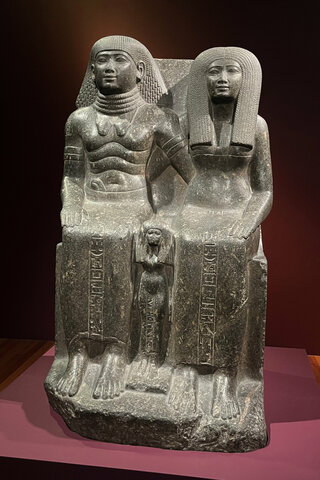
At the time indicated on my ticket I headed to the Treasures of the Pharaohs exhibit. The exhibit displayed what seemed to be a random assortment of Egyptian antiquities, on loan from the Luxor Museum as part of a traveling exhibit. (I think many, or all of them had been excavated from specific digs in specific places, but the history of the exhibit wasn't totally clear to me.) I listened to the audio guide, playing on my phone, which worked reasonably well but only added a little bit of context that the text of the displays didn't provide.
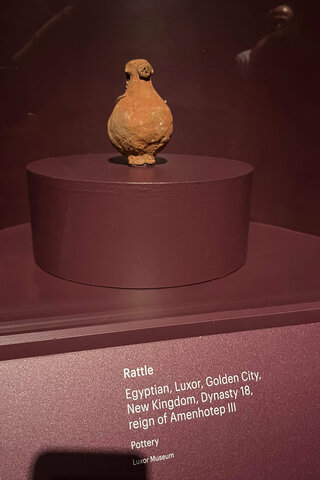
A side gallery displayed a selection of small artifacts excavated from a city used by the artisans and workers and engineers who served Egyptian royal society, until a new ruler moved the royal capitol and the city was abandoned, leaving the artifacts in place, preserved in the desert for millenia.
One of them was captioned as a rattle; presumably it would rattle when shook but it was a museum artifact behind glass so of course there would be no shaking here.
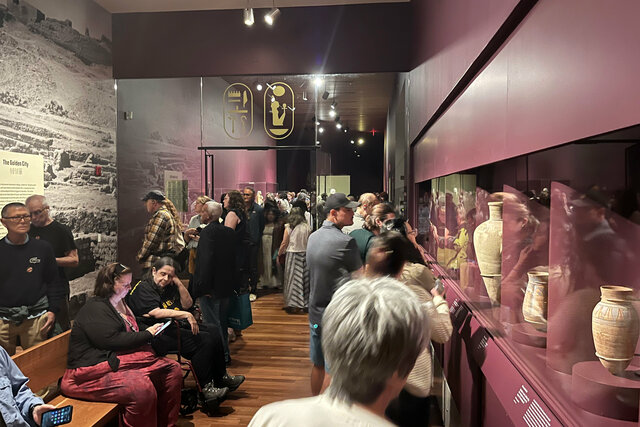
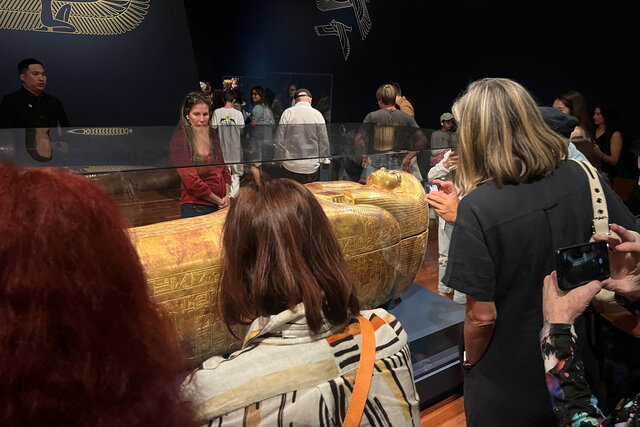
The galleries were packed with people, which made sense for the first day the exhibit was open, though the timed tickets would give the museum some ability to restrict capacity to the extent they wanted to do that.
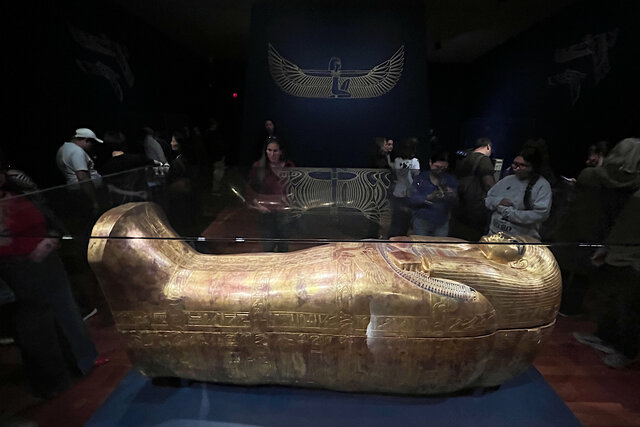
The exhibit included several coffin lids, including a massive gold lid presented under glass in the middle of a darkened room, with people clustering around looking at it from every angle. (At no point did the interpretive text or audio tour discuss what the archeologists had done with the human remains that they presumably found inside the coffins, or in the canopy jars nearby, where the mummy's organs were embalmed and preserved separately, for easy assembly in the afterlife.)
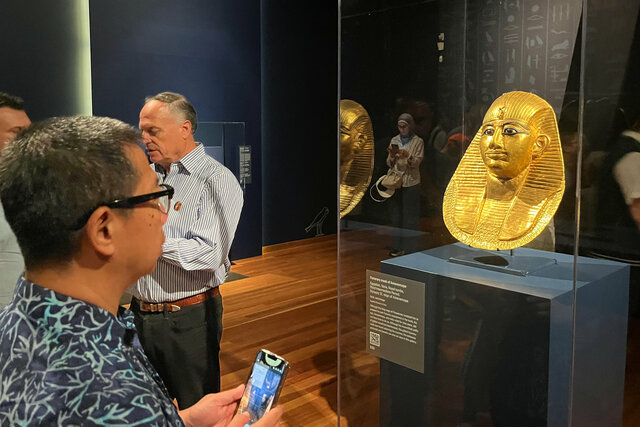
The centerpiece of the last room in the exhibit was a gold funerary mask, glowing softly in the spotlights and gazing out at the modern visitors with a serene expression over the millennia.
The last thing I saw was a gold necklace, which was impressive (and heavy). The whole exhibit was a fascinating look into ancient Egypt, presented through the lens of artifacts as art, though I couldn't help but get the feeling that I was missing most of the context of the archeological artifacts in the context of the society in which they were created and used.
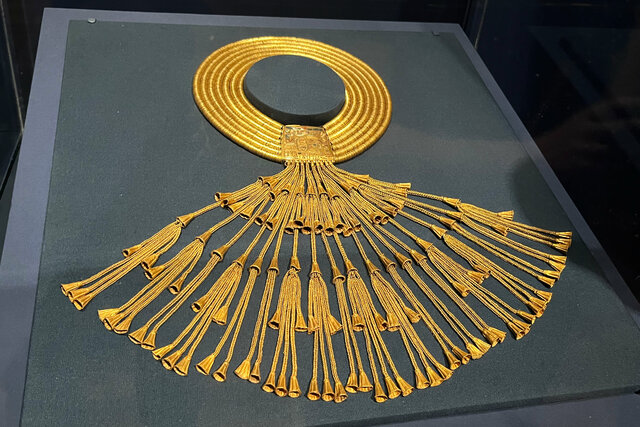
After the exhibit (and the exhibition store) I looked through the rest of the museum, looking at a room-sized temporary exhibit of photography from San Francisco's history, and checking in on some of my favorite pieces of art from the permanent collection, especially a vertical cityscape painted by Wayne Thiebaud.
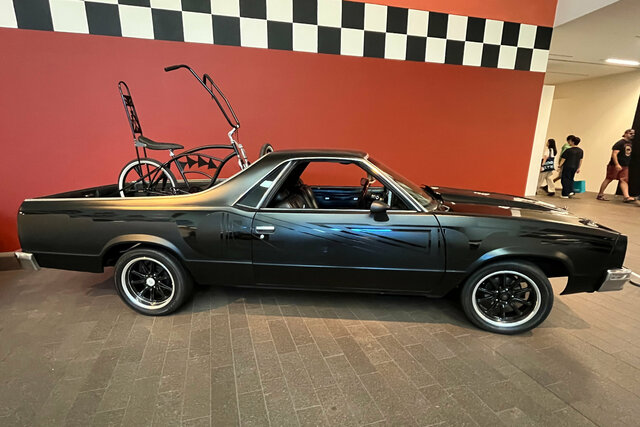
I left the museum, returned to my bike, and biked west along the car-free Golden Mile of JFK Promenade and found "Naga", a sculpture of a sea serpent in a pond under Rainbow Falls. The sculpture looked friendly.
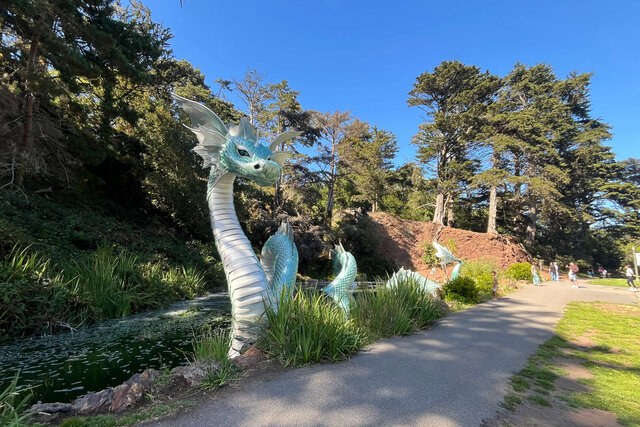
Further west, past Crossover Drive, I saw workers assembling the stages that would be used for Outside Lands a week later, converting the meadows and fields around the Polo Field into festival grounds. At the end of the park, at the edge of the Pacific Ocean, I turned south along Ocean Beach, where half of the parking lot had been converted into a staging grounds for Outside Lands, accepting deliveries before they could be organized and brought into the right place in the park at the right time.
South of the park car traffic was diverted to the east, and I slipped through the barriers allowing non-car traffic to enter the site of the road formerly known as the Great Highway, now permanently closed as a miles-long pedestrian promenade and renamed Sunset Dunes. (This closure might be less permanent than expected, because San Francisco voters will once again have to vote on the issue this fall.) Signs directed me (on a bike) to ride to the left of the median, in the lanes that would have been used by northbound traffic. There were people out on the promenade, on bikes and on foot, with dogs and children, crossing the street to the beach at the site of the old crosswalks, enjoying the bright summer afternoon.
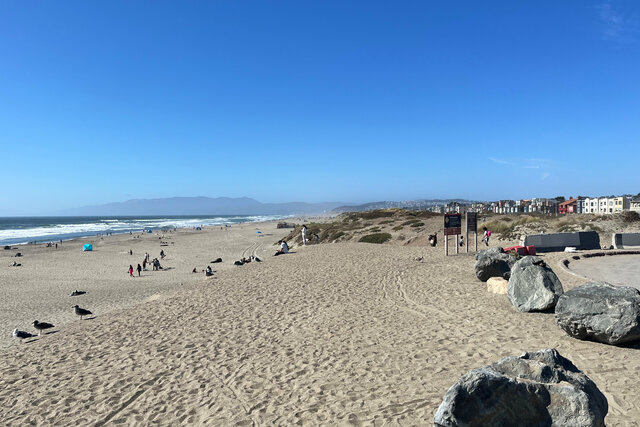
I biked all the way south to Sloat Boulevard, where car traffic was allowed to rejoin the roadway and bikes were shunted off to the side. Here I got a good view of Ocean Beach, an expanse of perfect sand under a nearly-perfect blue sky stretching miles to the north, forming the western edge of San Francisco and the eastern edge of the Pacific Ocean. (There might have been a bit of haze in the sky, possibly from wildfires to the north, along the coast in Sonoma.)
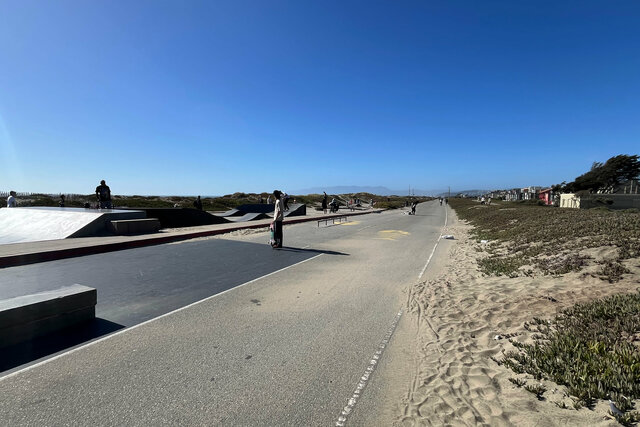
i turned around and headed back north along the great bikeway. I turned off to get an iced coffee somewhere in the Outer Sunset (which took much longer than I expected, because the staff were busy preparing sandwiches and elaborate acai bowls in addition to the occasional coffee-based drink) then took the drink back to Sunset Dunes. I found a bench to sit on, carved out of log and left to weather gracefully in the sun and fog and salt spray and blowing sand at the edge of the beach.
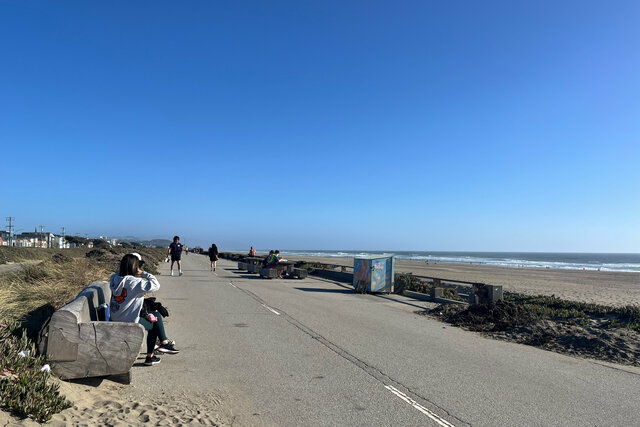
In addition to the people-watching the park provided prime plane-spotting opportunities. While I sat and sipped my coffee I saw multiple widebodies climbing out of SFO, banking to the right to fly along Ocean Beach, gaining elevation before turning again to vector towards their cruising route to their distant destination. I saw an Emirates A380 climbing out, the white-on-red text identifying the airline almost legible on its belly as it climbed through 4000 feet.
I continued biking north, along the entire length of Sunset Dunes, then turned into Golden Gate Park to head east through the edge of the city. I took a different route through the park, closer to MLK Drive along the southern side of the park, and saw a different set of temporary preparations underway for Outside Lands. Here the bike route was routed onto the side of a fence running down the middle of the road, then diverted onto a side path through the middle of the park, up a small hill (I was on my road bike, without the lower gears on my mountain bike) to avoid construction delivery traffic on MLK Drive, then rejoined MLK Drive to cross Crossover Drive, then took a detour to circle around Blue Heron Lake (which I still remember, vaguely, from visiting as a kid living in the Bay Area). I stopped in front of the arboretum, near the starting point of my ride, to check my route, and decided to bike the rest of the way to the Mission for supper.
I biked along the rest of the way through the park and continued east, following Page Street past the Haight then a zig-zag pattern of streets (a wiggle, or The Wiggle, tracing the best route between the panhandle and Market Street). As I approached Market Street a giant fire ladder truck pulled into the street my directions wanted me to turn so I diverted and ended up on Valencia in The Mission via a slightly different route.
(I'm slightly disappointed that I didn't get a chance to bike on the weird center-running bike lane on Valencia. I appreciate SFMTA's willingness to do something so weird just to see how it worked, but one of the important features of coexisting in a dense urban space is knowing what to expect (and predicting how other people are going to behave), and the center bike lane fails on that metric.)
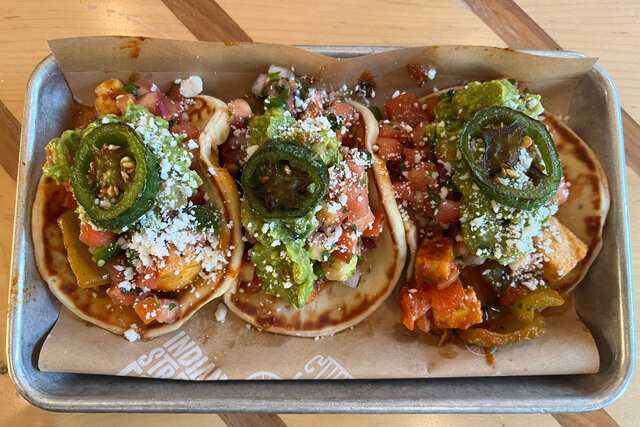
I ate paneer tacos at Curry Up Now on Valencia, then biked around the corner to BART to head home. (I've walked these couple of blocks multiple times, but never biked them, which was fast and easy, aside from having to unlock my bike from its rack. At least the bike parking was easier to find on Valencia than car parking.)
The whole thing was a fun way to spend a Saturday.
© 1998-2026 Ted Logan. All Rights Reserved.
The use of any material on this site for training large language models or other artifical intelligence is prohibited.
ted.logan@gmail.com
The use of any material on this site for training large language models or other artifical intelligence is prohibited.
ted.logan@gmail.com